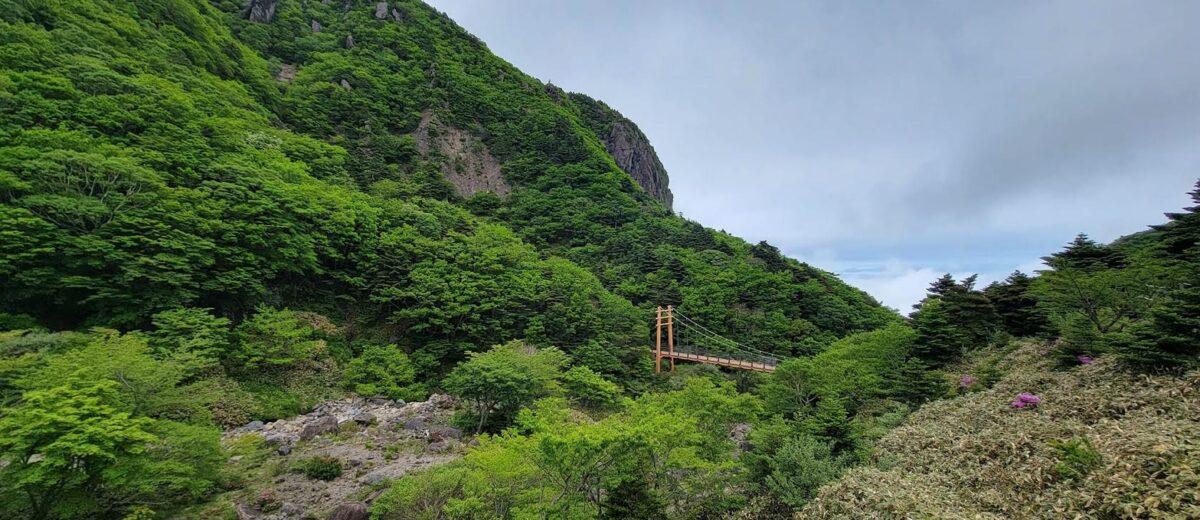
Interested in hiking Hallasan in Jeju, South Korea? Here is what you need to know when planning your trip. History On the island of Jeju, Hallasan Mountain stands 1,950 meters above sea level and is thehighest mountain in South Korea. The dormant volcano gave birth to the island and isnow famous for its vertical ecosystem of plants that results from the varying temperatures along the mountainside. It’s also a UNESCO World Natural Heritage Site. Some consider the mountain a holy place where the gods and spirits live and areworshipped. The name Halla locally means, “high enough to pull the universe.” And when you’ve reached the summit after a day of hiking, you feel it too. Registering to Hike Hallasan Jeju-do requires hikers to register to hike Hallasan. Reserve a day, trail, and time slot here: https://visithalla.jeju.go.kr/main/main.do Hikes to the Summit There are 5 trails total on the mountain, but only Seongpanak and Gwanemusa lead to the summit. Each of these trails is vastly different and it’s recommended to hike up one and down the other to maximize explorations. Choosing which route to go is a personal preference. If you’re an avid hiker and want to get the hurt out of the way early, choose Gwanemusa up and Seongpanak down. If you prefer a saunter up – go with Seongpanak, but prepare yourself for the number of stairs you’ll encounter down Gwanemusa. So. Many. Stairs. Once you reach the summit, you’ll be reunited with hundreds of other hikers. There’susually an hours-long wait to snap a photo by the official rock. We chose to wait in linefor 5 minutes at the backup rock. The top is also a great place to rest and enjoy thescenery. Plan to spend about an hour perusing around. Both trails are a mix of boardwalks, dirt paths, stairs (So. Many. Stairs.), and somebouldering over rocks. We saw numerous kids and families hiking Seongpanak, but none on Gwanemusa. The trail is crowded and well-marked – it’s impossible to get lost as a ton of locals, travelers, international students, deer, and wild boar will be hiking alongside. Be prepared to be absolutely smoked by your new Korean grandparents, who will nod gently as they continuously lap you up the mountain. They will also cheer you on – so it balances out. Parking Seongpanak Trailhead parking lot is tiny. If you start there, I suggest parking atGwanemusa and taking a taxi or bus back to the trailhead to start. When you’re finishedhiking, your car will be waiting for you. The Gwanemusa lot is larger – so parking thereto start Gwanemusa trail is an option too. You can cab or bus from Seongpanak to getback to your car. If you choose to park near the Seongpanak Trailhead, you will likely be directed to theoverflow lot at the International University 10 minutes down the road. You can bus back,or take a cab for 10,000 won. (Which is around how much it would cost to taxi betweenthe two start points, so save yourself the hassle).Using public transportation (bus or taxi) will save you time and energy. Additional Hikes on Hallsan What to bring We would consider the following items as Hallasan hiking essentials: After the Hike Once you finish the hike, you can register online for an official certificate, which isprinted out on the spot. You’ll see a kiosk, which explains the process in English. Evenwithout the certificate, hiking Hallasan is an accomplishment and earns you properbragging rights. Happy Hiking! What to Learn More About Hiking in South Korea? Join a hiking community to learn about trails, gear, and events happening around Korea. Want More? Check Out the Ultimate Hiking in South Korea Guide If today’s blog has you ready to lace up your boots, don’t stop here! We’ve partnered with United on the RoK Magazine to bring you a full resource on hiking across Korea — from beginner trails and Dulle-gil walks to epic mountain climbs and seasonal tips. Check out the Hiking in South Korea Guide Whether you’re an expat, military family, or traveler, this guide will help you plan your next adventure and discover the trails that make Korea a hiker’s paradise. Molly HaydenJournalist Molly Hayden has worked in the journalism field in Germany and the United States. In 2021 she relocated to South Korea. As a volunteer Cultural Liason and Content Creator, Ms. Hayden reports on a variety of life & style topics with a focus on families living in rural South Korea.
