

Guide to Choosing Storage for Kimchi and Fermented Foods
To make kimchi, you must understand the importance of using the correct containers for fermentation. You want to make an educated choice when fermenting foods or storing fermented foods for long periods of time. With a little knowledge, you can ferment your foods safely in Korea (or around the world). Let’s get into it.
Lens on the Information
Keep in mind, this information is written for international residents living in South Korea. In South Korea, many residents receive Kimchi as gifts or begin making their own at home. This blog addresses common concerns and questions in the international community regarding keeping kimchi at home.
Fermentation, Botulism, and the Safety of Kimchi
When fermenting food, you need to understand botulism:
- Botulism is a serious, potentially fatal illness caused by toxins naturally produced by C. botulinum when the bacteria grow under anaerobic conditions. By ‘anaerobic conditions’ we mean an environment without oxygen. Example: An air-tight plastic container
- The bacteria’s spores are widely present in soil, dust, and many environments. If they land in food storage conditions with no oxygen, low acidity, low salt, and a favorable temperature, the spores can germinate, multiply, and produce the potent botulinum neurotoxin.
- Eating such contaminated food may lead to symptoms like paralysis, respiratory failure, and even death.
Because of that, any preserved or fermented food must be stored in conditions that inhibit C. botulinum growth. That means you need either a strongly acidic solution or one that is salty, refrigerated, or in containers that don’t create an oxygen-free sealed environment.

Fears of Botulism from Home Cultures
Sometimes, new residents in Korea come from other communities that have experienced botulism, and they may feel afraid of kimchi. For example, some of our volunteers lived in Alaska in the 1970s and 1980s. During that time, some people switched from storing their fermented foods the traditional way to using plastic or glass containers, or sealed sacks/bags to store food indoors or above ground. This resulted in many deaths across the state. So they wanted to understand kimchi storage more deeply than others might.
The Complexity of Tradition and Evolving Cultures
The experience of some communities in Alaska provides a real-world illustration of the risk when traditional practices experience a culture shift. With Korea’s growing international population, we want to make sure our community understands the importance of understanding the preservation of fermented foods. We do not want to see food-borne illness issues occur for international residents living in South Korea due to a lack of information.
Each year, we receive more and more questions about choosing containers for fermenting kimchi. So, now that we’ve set the scene for the importance of understanding the intersection of traditional culture, plastics, and botulism, let’s explore fermenting food in South Korea and the containers used here.
Keeping all this in mind, if you follow the process for kimchi correctly, your risk for botulism is VERY low. In fact, it’s nearly unheard of to get botulism from Kimchi in Korea. Let’s talk about why this is.
Why Botulism in Kimchi is Highly Unlikely but Not Impossible
Traditional vegetable fermentations rely on lactic-acid bacteria (LAB) that lower the pH quickly (often below pH 4.6), creating an environment that’s hostile to C. botulinum toxin production. That means properly made, salted, and fermented kimchi is generally safe from botulism. Don’t skimp on the salt and store your fermented foods correctly, and you will be just fine.
Let’s start with traditionally fermenting food storage and then we will talk about modern options.
Koreans Traditionally Use Breathable Containers (like Onggi)
When you ferment in a breathable, porous clay jar, such as a traditional onggi, you’re not sealing off oxygen completely; instead, the jar allows for slow gas exchange and some airflow. As we explained earlier, this helps keep a balance favourable to harmless fermentation microbes (like lactobacilli) and prevents the buildup of harmful anaerobic bacteria.
In contrast, if you store fermented ( or “aging”) foods in airtight, non-breathable containers (e.g. plastic bags, sealed glass jars, or sealed plastic buckets) at the wrong temperature, you may create strict anaerobic conditions. This may, in turn, encourage C. botulinum spores (if present) to germinate and produce toxin. That’s especially risky for low-acid, low-salt foods like meats or fish (often the case in traditional fermentations of animal products). Since many types of kimchi contain raw seafood, it’s important to be aware.
So now you might be asking, “Then why are we all putting our kimchi into kimchi-tong?” Good question. Yes, many people do use plastic kimchi boxes/containers to store kimchi today. But whether they are “ideal” depends a bit on how you use them. It all comes down to being aware of food science. Here’s how plastic boxes stack up vs. traditional breathable containers. We want to talk about what works and what to watch out for.
Breathable (숨쉬는 김치통) vs Regular Plastic (김치통)
Modern kimchi storage usually falls into two categories:
- 숨쉬는 김치통 (breathable kimchi container): allows slow gas exchange
- 일반 김치통 / 플라스틱 김치통 (regular airtight plastic container): traps gas inside
Both are used widely in Korea today, but the purpose and outcome are not the same. The choice depends on whether you plan to ferment kimchi actively or mainly store it in a refrigerator of some kind.
Breathable Kimchi-tong (숨쉬는 김치통)
This type of container is made to mimic some characteristics of traditional 옹기 Onggi. The ventilated style container lids let gases escape naturally during fermentation instead of trapping them inside.

Best for:
- Active fermentation (발효 중)
- Slow aging (숙성 김치)
- Kimchi that sits at room temp briefly before refrigeration
- Anyone seeking deeper flavor development closer to 장독 fermented style
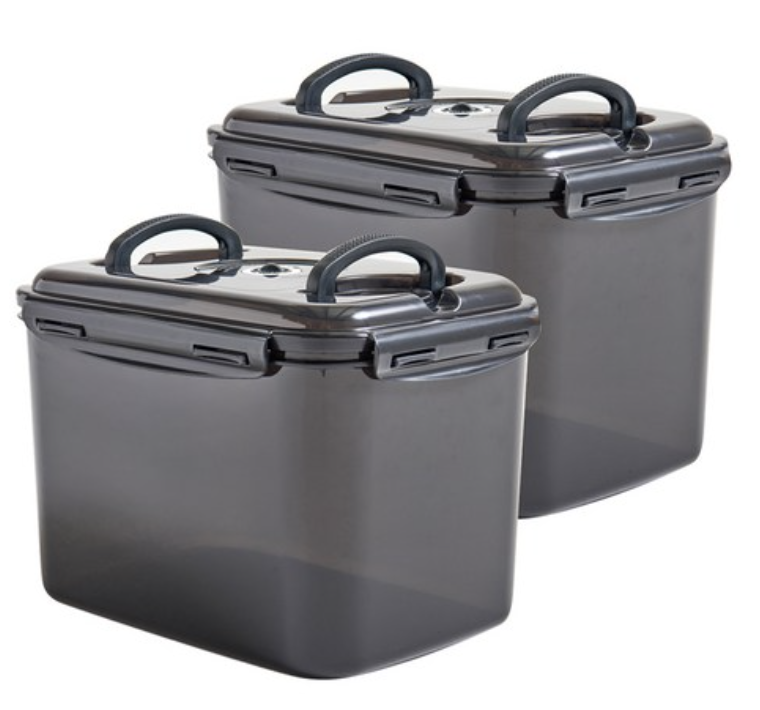
Why people like it:
✔ Reduces pressure build-up
✔ Prevents overflow during burping
✔ Creates a stable fermentation environment
✔ Flavor develops more slowly and evenly
✔ Closer to traditional fermentation culture
Downsides:
✘ Slight odor leakage (because it breathes)
✘ More expensive than basic plastic boxes
✘ Not ideal for transportation or long-term freezer storage
Standard Airtight Plastic Kimchi-tong (일반 김치통)
These are the common containers used in modern Korean homes, especially those with kimchi fridges (김치냉장고). They are great for storage but not ideal for active fermentation.
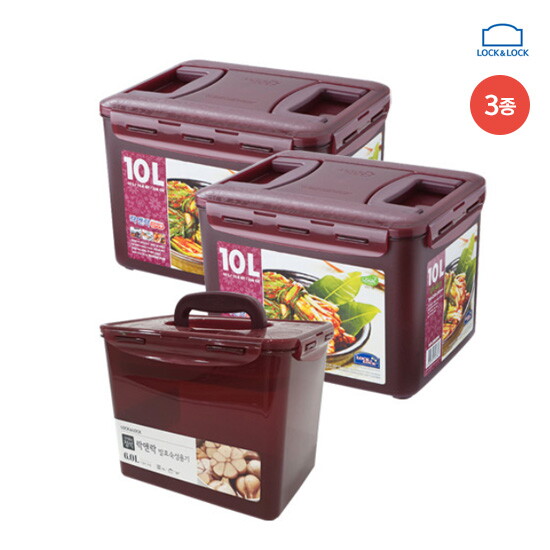
Best for:
- Already-fermented store kimchi (시판 김치)
- Refrigerator storage (냉장 보관)
- Fast consumption
- Batch storage for families
Why people use it:
✔ Affordable & easy to find
✔ Keeps strong smells contained
✔ Fits neatly inside kimchi fridges
✔ Convenient for everyday eating
Limitations:
✘ Gas builds quickly → lid bulging or leakage if not refrigerated
✘ Faster souring due to trapped CO₂
✘ Poor choice for long-term room-temp aging
✘ Not supportive of natural fermentation balance
Important Point: This type of container needs to live in the fridge when it’s sealed and not left out for long periods of time.
What You Lose Compared to Traditional Breathable Jars
Plastic containers do not mimic the natural “breathability” of traditional clay jars (Onggi, 항아리). This difference can affect fermentation. So think about this especially if you intend to ferment kimchi naturally over longer periods rather than simply store it.
Main drawbacks:
- No airflow/gas exchange: Plastic (especially airtight) traps the gases produced during fermentation. That can lead to pressure build-up (bubbling, overflow, possible lid bulging), or accelerate fermentation and potentially spoil flavor.
- Odor retention: Plastic tends to absorb and retain strong kimchi smells. Once you have stored kimchi in a container, the smell may be forever.
- Less traditional flavor profile/texture: Without gradual natural oxygen exchange and clay’s micro-porosity, fermentation may develop differently. Many fermentation experts recommend breathable containers (clay, glass with an airlock, or vessels designed for fermentation) for deeper, more balanced flavors.
- Plastic issues (potential chemicals, scratches): Some experts caution that repeated use, small scratches, or repeated acidic fermenting might degrade plastic or harbor unwanted bacteria over time.
In short, plastic containers trade off tradition and an optimal fermentation environment for convenience and speed.
What to Choose?
Now that we’ve broken down your choice, the following table organizes the information to help you make your choice:
| Situation | Best Option |
|---|---|
| Fresh kimchi for eating soon | Regular Kimchi-tong 일반 김치통 |
| Slow fermentation for deep flavor | Breathable Kimchi-Tong 숨쉬는 김치통 |
| Mainly refrigerated storage | Plastic-tong 플라스틱 김치통 |
| Want traditional taste & airflow | Breathable or Earthen Tong 숨쉬는 김치통 → or 소형 옹기 |
Special Considerations in Apartments
Because you may be living in an apartment or have limited space, using plastic or BPA-free plastic kimchi boxes is a practical, acceptable choice. Especially for weekly consumption, for kimchi or first-time fermenters, it’s often easier and cleaner.
However, if you want to explore traditional Korean fermentation fully, consider using breathable Kimchi-tong or smaller Onggi (earthenware clay jars). They may require more effort (cleaning, maintenance, space), but you’ll get a richer fermentation and a more traditional taste.
Read More About Kimchi Making
South of Seoul has compiled many blog posts over the years addressing kimchi making in South Korea.
- A Guide for Preparing Cabbages for Kimjang
- Making Jang (장) for Kimjang (김장)
- The Language and History of the Term “Radish” in Korea, Japan, and China

Founded in 2015, the South of Seoul team consists of volunteers on three continents working together to support English-speaking people traveling or living in South Korea. South of Seoul volunteers work with organizations and individuals across South Korea to improve equitable access to information across South Korea. Much of South of Seoul’s information focuses on Pyeongtaek, Gyeonggi-do, South Korea.
Blogs published under the authorship of “South of Seoul” include blogs compiled by multiple volunteers to improve access to standardized information unrelated to individualized personal experiences.

South of Seoul
Founded in 2015, the South of Seoul team consists of volunteers on three continents working together to support English-speaking people traveling or living in South Korea. South of Seoul volunteers work with organizations and individuals across South Korea to improve equitable access to information across South Korea. Much of South of Seoul's information focuses on Pyeongtaek, Gyeonggi-do, South Korea. Blogs published under the authorship of "South of Seoul" include blogs compiled by multiple volunteers to improve access to standardized information unrelated to individualized personal experiences.


You May Also Like

Suwon Day Trip: Fortress, Haenggung, and Fried Chicken

How to Find Business Hours in Korea
